World War Heroes — WW2 PvP FPS
- 4.5
- Rating
- 100.00M
- Installs
- Free
- Price

 Analysis by App-foxy
World War Heroes — WW2 PvP FPS is the kind of action game I return to when I want a quick burst of competitive shooting without committing to a long single-player campaign. Its appeal is straightforward: it places online players in World War II-inspired firefights and asks them to react quickly, learn familiar battlefield patterns, and improve through repeated matches. After spending time with it, my main conclusion is that it works best as an accessible mobile shooter with a strong pick-up-and-play rhythm, rather than as a deeply realistic military simulation.
That distinction matters. If you want a game that feels immediately playable on a phone or tablet, this one has a lot going for it. If you expect the precision, balance, and visual consistency of a premium console shooter, you may notice its limitations quickly. I found the experience most enjoyable when I treated each match as a focused session: warm up, experiment with a weapon or route, play a few rounds, and stop before the repetition starts to feel like work.
What makes the battlefield experience work
Developed by Azur Interactive Games Limited, this free action game has been available since November 22, 2017. It has grown into a large mobile shooter community, with more than 100 million installs and an average rating of 4.5 from roughly 3.4 million ratings. Those figures do not automatically make every match excellent, but they do tell me that the game has remained visible and relevant to a substantial audience for a long time.
You May Also Like

 Blood Strike: 2.5 Anniversary
Blood Strike’s Loadouts Turn Every Drop Into a Tactical Gamble
A close look at Blood Strike’s custom loadouts: how fast access to signature weapons reshapes its battle royale rhythm, rewards preparation, and narrows the gap between fights.

 Pandora - Music & Podcasts
Pandora’s Music Is Easy to Start, but Harder to Recover
Pandora’s strength is its low-effort path from a seed to a station. Its weak spot is how much confidence it asks you to place in connection, setup, and quiet recovery.

 8 Ball Pool
 Is Built on Rivalries, Rematches, and Routine
A close look at the rivalries, rematches, shared routines, and unanswered safety questions that turn a quick pool match into a persistent mobile community.

 Samsung Music
’s Quiet Strength Is Playing What You Already Own
Its reach comes less from spectacle than from dependable access to a personal library. That simplicity is both the app’s strongest retention engine and its ceiling.

 AccuWeather: Weather Radar
AccuWeather Review: A Quick, Clear Forecast for Everyday Decisions
For everyday plans, the best forecast is the one you can understand quickly. AccuWeather makes rain timing, radar, and local conditions easy to act on, with a few trade-offs.

 Hill Climb Racing
Why Hill Climb Racing Still Turns Crashes Into One More Run
A tiny car, a bumpy hill and one more upgrade: Hill Climb Racing keeps resurfacing because its simple chaos makes every near-miss feel personal.
More From Our News Desk



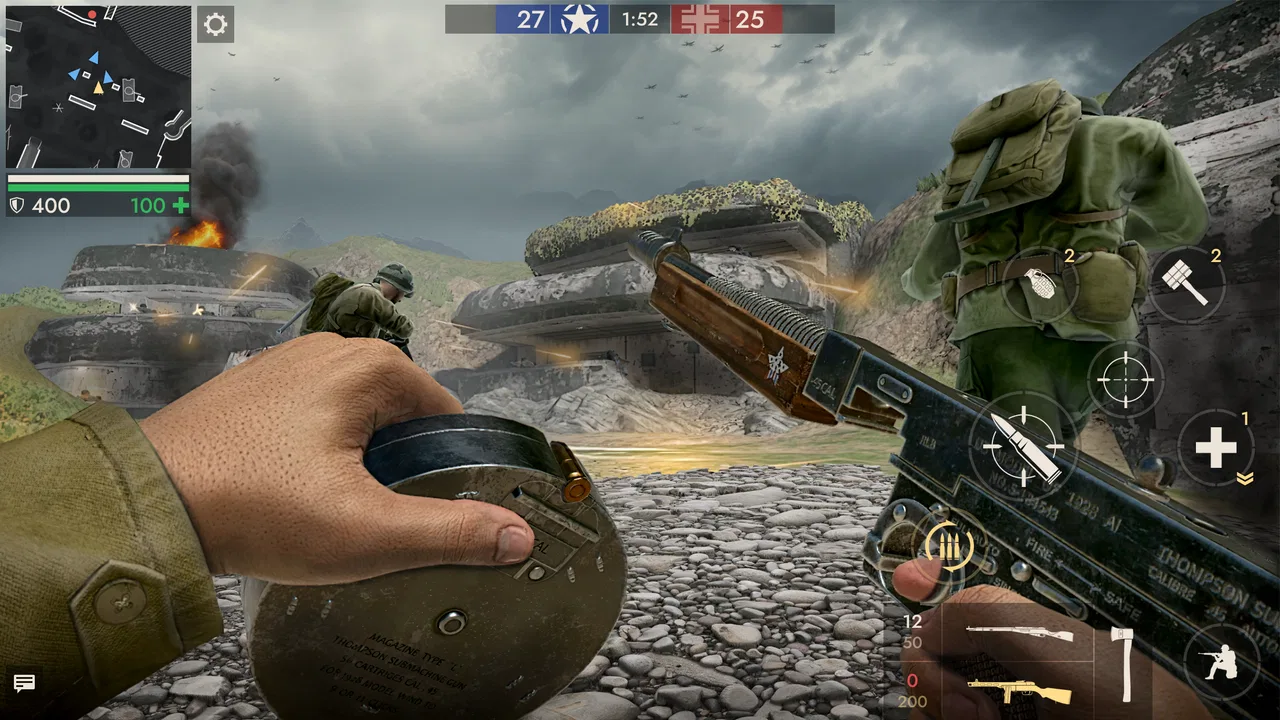
The central attraction is the competitive format. The store presentation emphasizes five-versus-five battles, and that scale gives matches a useful middle ground. Teams are large enough for firefights to feel active, but not so large that individual decisions become completely invisible. When I move with teammates, cover a likely approach, or choose to hold back instead of charging, my contribution feels more meaningful than it would in a chaotic free-for-all.
The World War II setting also gives the game a recognizable identity. Weapons, environments, and the general visual language point toward historical combat rather than modern tactical gadgets or futuristic abilities. I appreciate that choice because it keeps attention on positioning and aim. There is less temptation to solve every encounter with a special power, and more reason to think about sightlines, timing, and the direction from which opponents are likely to appear.
That does not mean the game is a strict historical recreation. I would approach it as an arcade-style interpretation of the period. The setting supplies atmosphere and a consistent theme, while the actual match experience is built around fast mobile competition. This balance makes it easier to start playing, especially for someone who is interested in World War II games but does not want to study complicated systems before entering a match.
Controls that reward adjustment rather than instant mastery
Touchscreen shooting always involves compromise, and this game is no exception. On a larger phone, I found it easier to separate movement, aiming, and firing without covering too much of the screen with my fingers. On a smaller device, the same layout can feel crowded during close-range fights. The first few sessions are therefore less about winning and more about learning how much pressure and movement produces a controlled response.
My practical advice is to avoid changing every control option at once. I get better results by adjusting one element, playing several matches, and then deciding whether the change actually helped. A sensitivity setting that feels fast and exciting in an open area may make close-quarters aiming unstable. Conversely, a very slow setting can make it difficult to track an opponent who crosses the screen. The best setup depends on the device and your habits, so copying another player's arrangement is not automatically an improvement.
Another useful habit is to separate movement from panic. On a touchscreen, it is easy to drag aggressively when surprised, which often makes the camera overshoot the target. I have found that short, deliberate corrections are more reliable than constant sweeping. This is a small technique, but it makes a visible difference once opponents stop standing still and begin using cover intelligently.
The game is also more approachable when I treat the opening seconds of a match as information gathering. Instead of rushing toward the first visible enemy, I watch where teammates are moving, identify the lanes that attract the most fire, and choose a route that gives me an escape option. That approach produces fewer spectacular moments, but it also reduces the number of deaths caused by entering the same exposed area repeatedly.
Why team size changes the way I play
In a five-versus-five battle, every player can influence the flow, but no single mistake necessarily ends the round. I like that tension. It encourages me to support the team without feeling that I must carry the entire match. A player who watches a flank, delays an advance, or draws attention away from an objective can be useful even without leading the scoreboard.
This is also where the game asks for more patience than its quick matches might suggest. Charging toward an opponent can be satisfying, but repeated solo attacks usually teach the enemy where to expect you. I get better results by varying my route and resisting the urge to repeat a failed push immediately. If a lane is defended, approaching from a different angle or waiting for teammates to create pressure is often more effective than trying to win the same duel again.
For an everyday example, imagine having fifteen minutes during a commute break or after finishing work. I can launch the game, play a short sequence of matches, and focus on one small goal: improve my aim with a particular weapon, learn a map route, or practice staying alive while supporting teammates. That makes the game fit naturally into spare time. The drawback is that a close match can make it difficult to stop, especially when the next round feels like an opportunity to correct a recent mistake.
Progression, spending, and the real cost of free play
The game is free to download, which lowers the barrier to trying it. It also includes in-app purchases ranging from $0.49 to $104.99 per item. I consider that range important when deciding whether the game is suitable for a younger player or for someone who prefers a completely pressure-free experience. The listed content rating is Teen, so families should still treat it as a combat game rather than a harmless casual pastime.
My recommendation is to decide on a spending rule before playing for a long time. Free-to-play shooters can make small purchases feel insignificant individually, while repeated purchases become much less minor over several weeks. I would first learn the controls and decide whether the core matches are enjoyable without buying anything. If the game is not fun in that state, spending more is unlikely to fix the underlying problem.
There is also a psychological trade-off in competitive games: equipment and progression can make improvement feel measurable, but they can distract from the skills that matter most. Better decisions about cover, timing, and positioning often help more than simply chasing the next unlock. I prefer to use progression as a reason to experiment, not as proof that I must keep playing until every available reward is collected.
Players who dislike any form of optional spending may find the model irritating even if they never pay. In that case, a premium shooter with a single upfront purchase may be a better fit. On the other hand, someone who wants to sample a mobile action game before spending anything will appreciate being able to start without an entry fee.
The weaknesses I noticed after the first excitement
The biggest limitation is repetition. The basic loop of entering a match, fighting, improving, and trying again is satisfying for a while, but it can lose freshness if you expect every session to feel different. The World War II theme gives the game character, yet the familiar competitive structure eventually becomes more important than the setting. Players who need a strong story, a sense of exploration, or a campaign with carefully written characters should look elsewhere.
Mobile competition also brings uneven experiences. Touch controls can make a close duel feel less precise than it would with a mouse or controller. Even when I understand why I lost, the result can still feel frustrating if the opponent's movement and my own camera correction do not line up cleanly. A larger screen helps, but it does not transform the game into a desktop shooter.
Another weakness is the learning curve created by map knowledge. New players may interpret repeated defeats as an aim problem when the real issue is exposure. Experienced players know which corners are dangerous, which paths are predictable, and when an apparently safe position has too many angles pointed at it. This can make the early hours feel harsher than the store summary suggests. I would advise beginners to focus on surviving longer rather than chasing a high elimination count immediately.
The current version is 1.54.3, so the game has continued receiving version updates over its lifespan. That is encouraging for ongoing support, but it also means the experience may evolve over time. Players who dislike changing interfaces, balance adjustments, or shifting progression expectations should be prepared for a live mobile game rather than a fixed product that will remain exactly the same after installation.
Who should play it, and who should skip it
I think this is a good choice for someone who wants a recognizable war setting, short online matches, and a competitive game that can be played in small sessions. It is especially suitable for players who enjoy learning through repetition. Each loss can reveal a practical lesson: I exposed myself too early, followed the same route, ignored a teammate's position, or tried to win a fight that should have been avoided.
It also suits friends who enjoy discussing tactics without needing a complicated squad-management system. You can keep the conversation simple: cover this lane, wait for the push, avoid that open area, or move together. The five-versus-five scale supports cooperation while leaving room for individual play. A player who prefers to remain completely independent may still enjoy it, but the strongest matches tend to come from people who pay attention to the team's shape.
I would not recommend it as the main game for someone seeking a historically detailed experience. The World War II theme is attractive, but the focus is competitive action rather than a careful lesson in military history. I would also point fans of slower tactical shooters toward a different option if they want deliberate planning, highly realistic weapon behavior, or long rounds where one mistake has enormous consequences.
Likewise, players who are highly sensitive to touchscreen aiming should try a few matches before committing emotionally to the progression. The game can feel responsive once the controls are familiar, but it will not erase the basic limitations of playing a shooter on glass. If your preferred alternative is a controller-based console game, you may find the mobile format more convenient but less satisfying in direct firefights.
How I would approach the game as a new player
I would begin by playing without worrying about rankings or purchases. The first goal should be to understand how quickly exposed positions become dangerous. I would follow teammates at a modest distance, use their movement to identify threats, and avoid standing in the center of open spaces just because they offer a clear view.
Next, I would choose one repeatable route on each familiar battlefield and learn its risks. The aim is not to memorize every detail immediately. It is to recognize where I can retreat, where an enemy is likely to appear, and which areas create crossfire. This knowledge often improves performance more quickly than changing weapons after every defeat.
I would also review my losses while they are still fresh. Was I reloading in the open? Did I chase an opponent around a corner without knowing what waited beyond it? Did I ignore the minimap or the movement of my team? These questions turn a frustrating match into useful practice. The game is much more rewarding when I treat failure as feedback rather than as a reason to spend money or blame the controls.
Finally, I would stop a session when frustration starts affecting decisions. Competitive mobile games can encourage a cycle of immediate rematches, but tired reactions usually produce more reckless pushes. A short break can be more valuable than another round played with tense hands and a fixed idea of revenge.
My verdict after weighing the strengths and compromises
World War Heroes — WW2 PvP FPS succeeds because it gives mobile players a clear reason to return: themed online firefights that are easy to understand but rewarding to improve at. The team format creates room for useful decisions, the setting separates it from modern or futuristic shooters, and the free entry point makes experimentation simple. Its long presence and broad audience also suggest that it has found a durable place among mobile action games.
At the same time, I would not call it a perfect substitute for a premium shooter. Repetition, touchscreen precision, competitive learning curves, and optional purchases all shape the experience. Those are not minor details; they determine whether the game feels exciting or exhausting for a particular player.
My recommendation is clear: try it if you want accessible World War II-themed PvP action in short sessions, but keep your expectations centered on arcade competition rather than historical simulation. I would happily suggest it to a friend who enjoys mobile firefights and likes improving one match at a time. I would steer a story-focused player, a realism enthusiast, or anyone seeking a completely purchase-free environment toward another kind of game.
For the right audience, the strongest quality is its practical flexibility. I can play casually for a few minutes, or I can focus on routes, teamwork, and control adjustments when I want a more serious challenge. That range is why I think it remains worth trying. Just remember that the most satisfying progress comes from better choices on the battlefield, not from assuming that the next item or upgrade will solve every problem.
FAQs for World War Heroes — WW2 PvP FPS
01What platforms is World War Heroes available on?
World War Heroes is available for both Android and iOS devices. You can download it from the Google Play Store for Android devices and the Apple App Store for iOS devices. The game is optimized for mobile play, providing an immersive World War II experience on your smartphone or tablet.
02Does World War Heroes require an internet connection to play?
Yes, World War Heroes requires a stable internet connection to play. As a multiplayer game, it connects you with players from around the world for real-time battles. The online functionality ensures you can engage in various multiplayer modes with other gamers, making internet connectivity essential.
03Are there in-app purchases in World War Heroes?
World War Heroes offers in-app purchases that allow players to buy various items, such as weapons, gear, and other enhancements. These purchases can enhance the gaming experience but are not mandatory to enjoy the game. Players can progress through the game without spending money, but purchasing items can provide a competitive edge.
04What game modes are available in World War Heroes?
World War Heroes offers a variety of game modes, including Team Deathmatch, Bomb Mode, Team Squad, and Hardcore Mode, among others. Each mode provides a unique gameplay experience, allowing players to choose their preferred style of combat, whether it be strategic teamwork or intense solo missions.
05Is World War Heroes suitable for all ages?
World War Heroes is rated for teens and above due to its war-themed content and realistic violence. The game features intense combat scenarios that mimic World War II battles, which may not be suitable for younger audiences. Parents should consider these elements when determining if the game is appropriate for their children.
Pros
- Immersive WWII battlefield experience
- Wide range of authentic weapons
- Multiple game modes for variety
- Smooth and responsive controls
- Regular updates enhance gameplay
Cons
- In-app purchases can be costly
- Occasional server connectivity issues
- Graphics may lag on older devices
- Limited offline play options
- Some maps feel repetitive over time

World War Heroes — WW2 PvP FPS
Gallery